
Hidden Gems of South America
- Larissa

- 3. Sept. 2025
- 4 Min. Lesezeit
Before samba, Patagonia and Machu Picchu, there are the Guianas – three little countries on the shoulder of South America that most travelers skip. Which is exactly why they’re so fascinating.
They’re called the Three Guianas because this corner of South America was once carved up between three colonial powers: British Guiana (today Guyana), Dutch Guiana (today Suriname), and French Guiana (still officially France).
I’m not writing this in real time (by now, we’ve already crossed borders into another country), but I couldn’t leave this chapter out. Because honestly, it felt like discovering a secret.
We started the adventure with our friend Alex, who joined us for three weeks. And since the Guianas aren’t exactly touristy – think small fisherboats for border crossings, endless forms, and very little tourist infrastructure – we joined a guided tour. In hindsight, best decision ever.

Guyana 🇬🇾
Guyana is about the size of the UK, but with fewer than a million people. Around 80% is still pristine rainforest, making it one of the greenest countries on Earth and a paradise for birdlife. Running through it is the Essequibo River, the country’s lifeline – wider than many seas, stretching 1’000 km long, and once the heart of Dutch and British colonial trade.
We kicked off with a tiny propeller flight to Kaieteur Falls – me, with flight anxiety, squeezed next to the pilot. Every bump was a drama, but when we landed, it was worth it. Kaieteur is five times higher than Niagara, crashing down into untouched jungle. No fences, no Starbucks, just raw thunder.
The next day, we followed the Essequibo, stopping at Fort Island, once the seat of Dutch administration, then drifting on to the mining town of Bartica and the wild paradise of Sloth Island. By evening, we cooled off at Baracara Falls, hidden deep in the rainforest.
Back in Georgetown, we admired colonial landmarks: St. George’s Cathedral (the tallest wooden church in the world), the old law courts, the botanical gardens. Georgetown feels more Caribbean than South American – reggae beats, cricket matches, Creole everywhere. But beneath it, you feel the weight of history. Guyana was British Guiana until 1966. Only then did Venezuela suddenly claim a third of the country – conveniently after oil was discovered offshore.




Suriname 🇸🇷
Suriname is Austria-sized, with fewer people than Zurich. And the official language is Dutch. Standing in Paramaribo ordering food in Dutch while surrounded by rainforest is as surreal as it sounds.
We crossed by boat into the country and soon found ourselves on the Commewijne River, spotting pink-bellied dolphins that danced around us, impossible to capture on camera. Later, we wandered through Frederiksdorp, a beautifully restored coffee plantation, where it’s hard to believe enslaved Africans once worked under brutal conditions. Even after slavery’s abolition, they were forced to labor for ten more years. Freedom on delay.
Our guide Sharda – a Surinamese supermodel moonlighting as the most charismatic guide you’ll ever meet – pointed us towards two books I now recommend to you: “We Slaves of Suriname” by Anton de Kom and “The Cost of Sugar” by Cynthia McLeod. Both are raw, necessary reads.
Paramaribo itself is a collage: Fort Zeelandia, the Palm Gardens, the lively riverside boulevard Waterkant. It’s a city where a mosque and a synagogue stand side by side, quiet symbols of coexistence.




French Guiana 🇬🇫🇫🇷
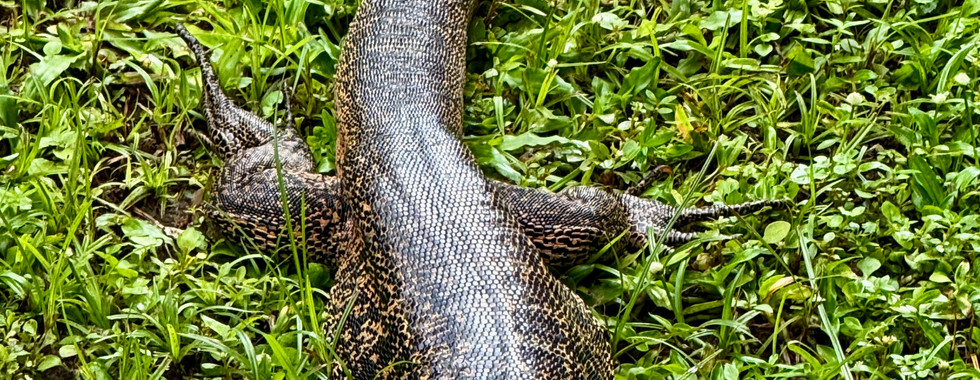
French Guiana looks and feels like a country in its own right – but technically, it isn’t. It’s an overseas department of France, which means the euro in your pocket still works, the tricolor flag flies above government buildings, and on paper you’re standing in the European Union and the Schengen Area. Imagine: Schengen borders, but with howler monkeys in the trees. And yes, a pain au chocolat in the rainforest tastes just as great as in Paris.
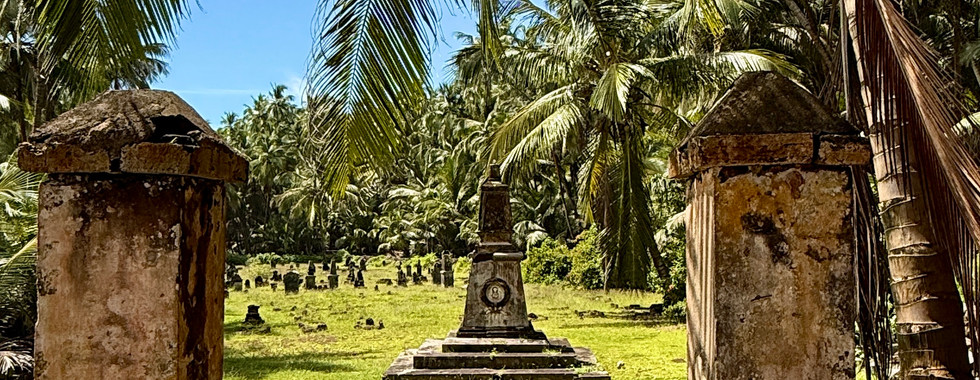
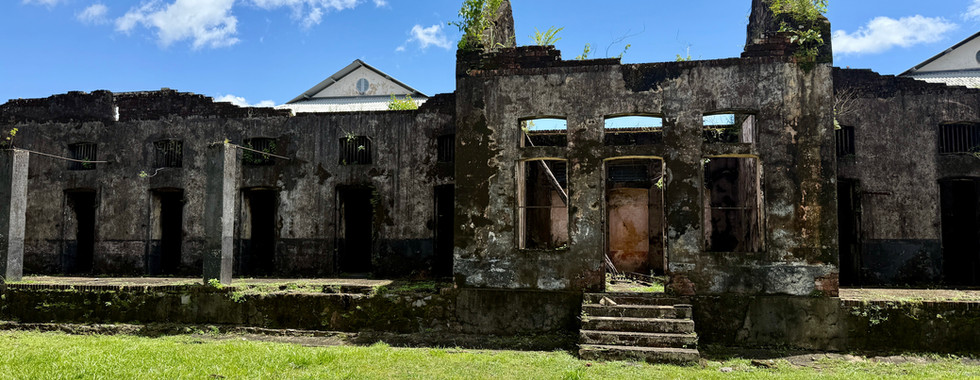
The contrast is wild. On one day, we took a boat to the Salvation Islands, exploring the ruins of the penal colony where political prisoners and the infamous “Papillon” were held. Devil’s Island is paradise from afar, hell up close.
The next day, we visited the Arianespace Centre in Kourou. The installations were fascinating, though the entire tour was in French – and let me tell you, rocket science in French doesn’t get easier. Luckily, our guide Irvin (absolute legend, fluent in English and full of authentic passion) brought it all back to life.
If you want to dive deeper, read or watch Papillon. Walking among the ruins, it feels less like a story and more like ghosts still whispering.









The Guianas, in one breath
Three countries, three different worlds. In just days we crossed from English to Dutch to French, from rainforests to rocket launches.
And here’s the twist: while locals told me, “of course we’re South American,” they also admitted they feel much closer to the Caribbean. The vibe is unmistakable – the music, the food, even the way people talk. It makes sense too: both Guyana and Suriname are members of CARICOM, the Caribbean Community. So geographically South America, culturally something else entirely.
Traveling here isn’t easy – border forms multiply, ferries run on their own time, and tourist infrastructure is minimal. But that’s what makes it unforgettable.
The Guianas are living proof that colonial legacies are not just past tense. They live in languages, borders, economies, and identities. And if you let them, they’ll challenge how you see South America – and history itself.
Because here’s the truth: these countries may look small on a map, but once you’ve been there, they take up a big space in your mind and heart. And they don’t leave.


Kommentare